Smile Liar: A Digital Art Evaluation
In the realm of digital art assets, specific stylistic choices often dictate the utility and emotional resonance of a piece. The Smile Liar design represents a distinct intersection of traditional artistic techniques and modern digital distribution. This article evaluates the characteristics, applications, and limitations of this specific digital file to assist creators, crafters, and designers in determining its suitability for their projects.
Understanding the Smile Liar Design
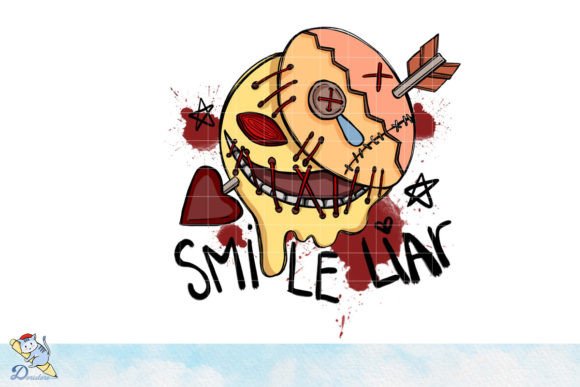
The Smile Liar artwork is defined by its unique production method. It begins as a physical drawing executed with pen and ink, utilizing a freehand flowing line technique. This approach prioritizes organic movement and human imperfection over the rigid precision of vector software. Once the original sketch is complete, it is reproduced digitally to create a high-resolution file. The coloration is applied using watercolor brushes, selectively highlighting specific areas rather than filling the entire composition. This results in an image that retains the texture and fluidity of traditional media while existing as a versatile digital asset.
For those considering this file, it is essential to understand that the aesthetic is rooted in the "hand-made" look. The flowing lines suggest spontaneity, while the watercolor accents provide depth without overwhelming the primary ink structure. This combination creates a visual style that feels personal and artisanal, distinguishing it from standard clip art or geometric vector designs.
Key Technical Specifications
When evaluating digital downloads, technical specifications are critical for ensuring the final output meets quality standards. The Smile Liar product delivers a PNG file format, which supports transparency. This feature allows the image to be placed over various backgrounds without the need for manual removal of a white box.
The file is provided at a resolution of 300 DPI (dots per inch) with dimensions of 4000×4000 pixels. These metrics indicate that the image is suitable for large-format printing without significant loss of clarity. The high pixel count ensures that when printed on sublimation paper, waterslide decals, or standard photo paper, the details of the pen strokes and watercolor gradients remain sharp. However, users must note that this is a raster image, not a vector file. While the resolution is high, scaling beyond the intended parameters may eventually result in pixelation, unlike vector graphics which can be scaled infinitely.
Primary Applications and Use Cases
The versatility of the Smile Liar digital file makes it appropriate for several specific crafting and design scenarios. Its transparent background and high resolution make it particularly well-suited for:
- Sublimation Printing: The vibrant potential of the watercolor highlights pairs well with polyester fabrics and coated ceramics, allowing the colors to transfer effectively.
- Waterslide Decals: For model makers or those creating custom phone cases, the detailed line work translates well onto curved surfaces.
- Home Decor: The artistic nature of the piece fits seamlessly into framed prints, canvas wraps, or wall art projects where a gallery-like feel is desired.
- Apparel Design: T-shirts and tote bags can benefit from the organic aesthetic, offering a softer alternative to bold, block-lettered graphics.
These applications leverage the file's strength: the ability to mimic hand-painted art in mass-produced or one-off items. For individuals looking to add a touch of artistic flair to functional objects, this file serves as a strong candidate.
Benefits and Tradeoffs
Adopting the Smile Liar design offers several advantages. The primary benefit is the immediate access to a professionally styled image without the time investment required to draw and scan one's own artwork. The high resolution (4000×4000 pixels) provides flexibility for various print sizes, reducing the risk of blurry outputs. Furthermore, the PNG format with a transparent background simplifies the design process, as the image can be layered easily in graphic design software.
However, there are tradeoffs to consider. Because this is a raster image created from a photograph of a drawing, it lacks the scalability of vector files (such as SVG or EPS). If a project requires extreme enlargement beyond the native resolution, the image quality may degrade. Additionally, the "freehand" nature means the lines are not perfectly uniform; while this is an aesthetic choice, it may not suit projects requiring strict geometric alignment or industrial precision.
Another consideration is color variance. As with any digital-to-physical translation, colors may vary between devices and printers. The watercolor hues seen on a monitor might appear slightly different when printed, depending on the printer profile and ink used. Users should anticipate this variability and test small batches before committing to large runs.
When Alternatives May Be Preferred
While the Smile Liar file is robust for many applications, it is not a universal solution. There are situations where alternative file types or artistic styles may be more appropriate.
If the project involves cutting machines such as Cricut or Silhouette, this file is not suitable. The product description explicitly states that there are no cutting files included. Cutting machines typically require vector paths to guide the blade, whereas a PNG image provides only visual data. In these instances, a dedicated SVG or DXF file would be necessary.
Furthermore, if the design goal is to achieve a highly polished, corporate, or minimalist look, the organic, watercolor-heavy style of Smile Liar might clash with the brand identity. Projects requiring flat, solid colors without gradient transitions or texture effects would benefit more from clean vector illustrations.
Practical Decision-Making Insights
To determine if the Smile Liar aligns with your goals, consider the following factors:
- Project Medium: Are you printing on fabric, ceramic, or paper? If yes, this file is likely a good fit. Are you cutting vinyl or heat transfer film? If yes, look for a vector alternative.
- Aesthetic Preference: Do you value the look of hand-drawn art and watercolor textures? If so, this design enhances the handmade feel. If you prefer sleek, computer-generated perfection, this may not meet your expectations.
- Technical Capability: Do you have the software and hardware to handle high-resolution PNGs? While user-friendly, managing large files requires adequate storage and processing power.
- Color Accuracy Needs: Is exact color matching critical? If so, account for the potential variance between screen and print inherent in watercolor-style digital files.
Ultimately, the Smile Liar digital file is a resource for those who wish to integrate traditional artistic elements into modern digital workflows. By understanding its technical constraints and aesthetic strengths, buyers can make informed decisions that enhance their creative projects without unnecessary trial and error. Whether for personal gifts or small business inventory, this asset offers a practical bridge between the charm of pen-and-ink illustration and the convenience of instant digital delivery.